
Published: October 22, 2026
AFFILIATE DISCLOSURE: As an Amazon Associate I earn from qualifying purchases. Links on this page go to Amazon, and I may earn a commission at no extra cost to you.
How this guide was put together: I have not tested these machines hands on. The picks are based on published specs, manufacturer manuals and documentation, and patterns in buyer reviews on Amazon. Where the manufacturer and the Amazon listing disagree, I say so. Details were checked on 22 October 2026 and listings can change, so check the product page before you buy.
There is no single best espresso machine for beginners. There are three sensible starting points, and the right one depends on how much hands on time you want and whether you already own a grinder.
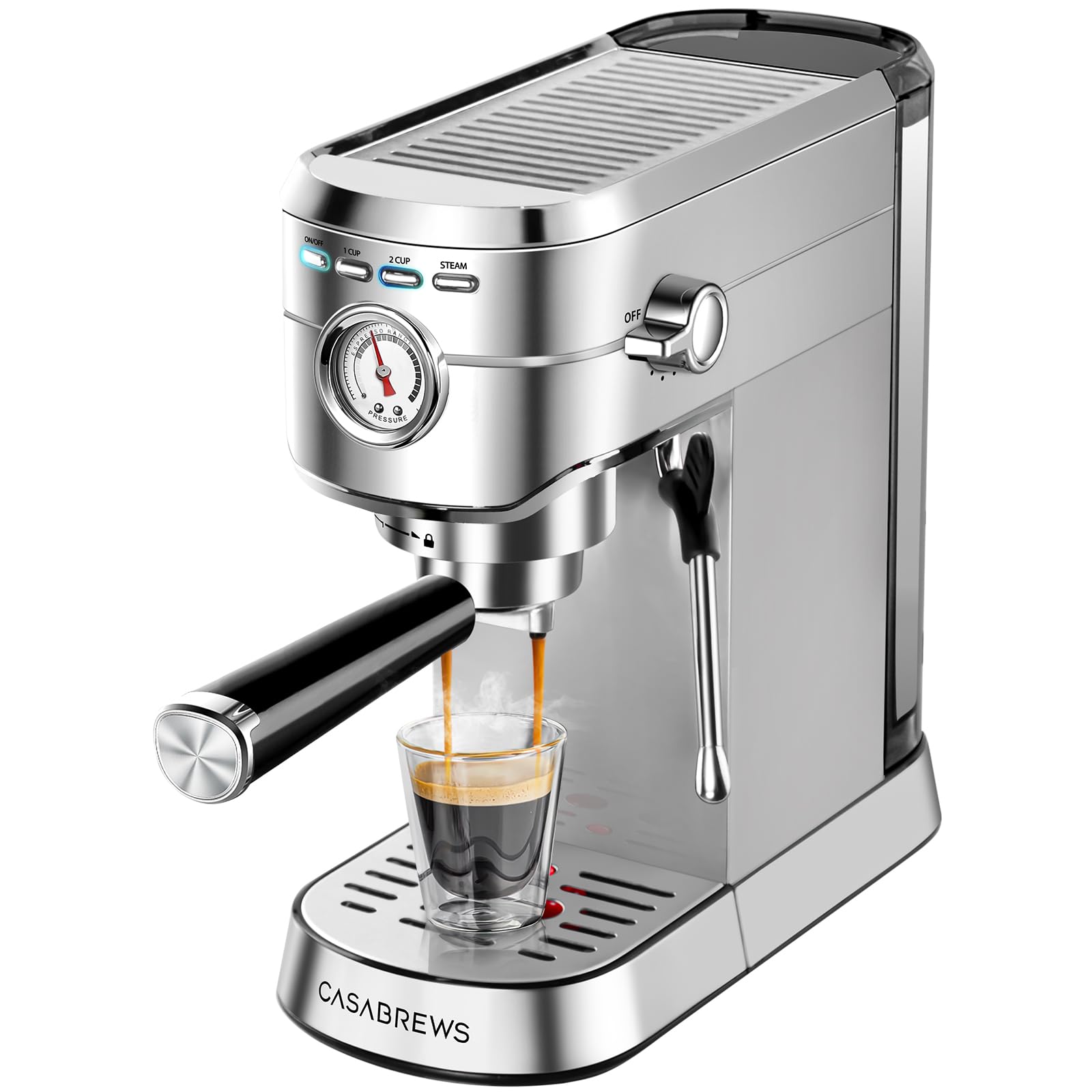
CASABREWS CM5418 (budget): small budget, small counter, happy to use pre ground coffee at first. A compact manual (semi automatic) machine with no grinder.
Breville Barista Express (premium): you want to learn real espresso with fresh ground beans without buying a separate grinder. A semi automatic machine with a built in grinder.
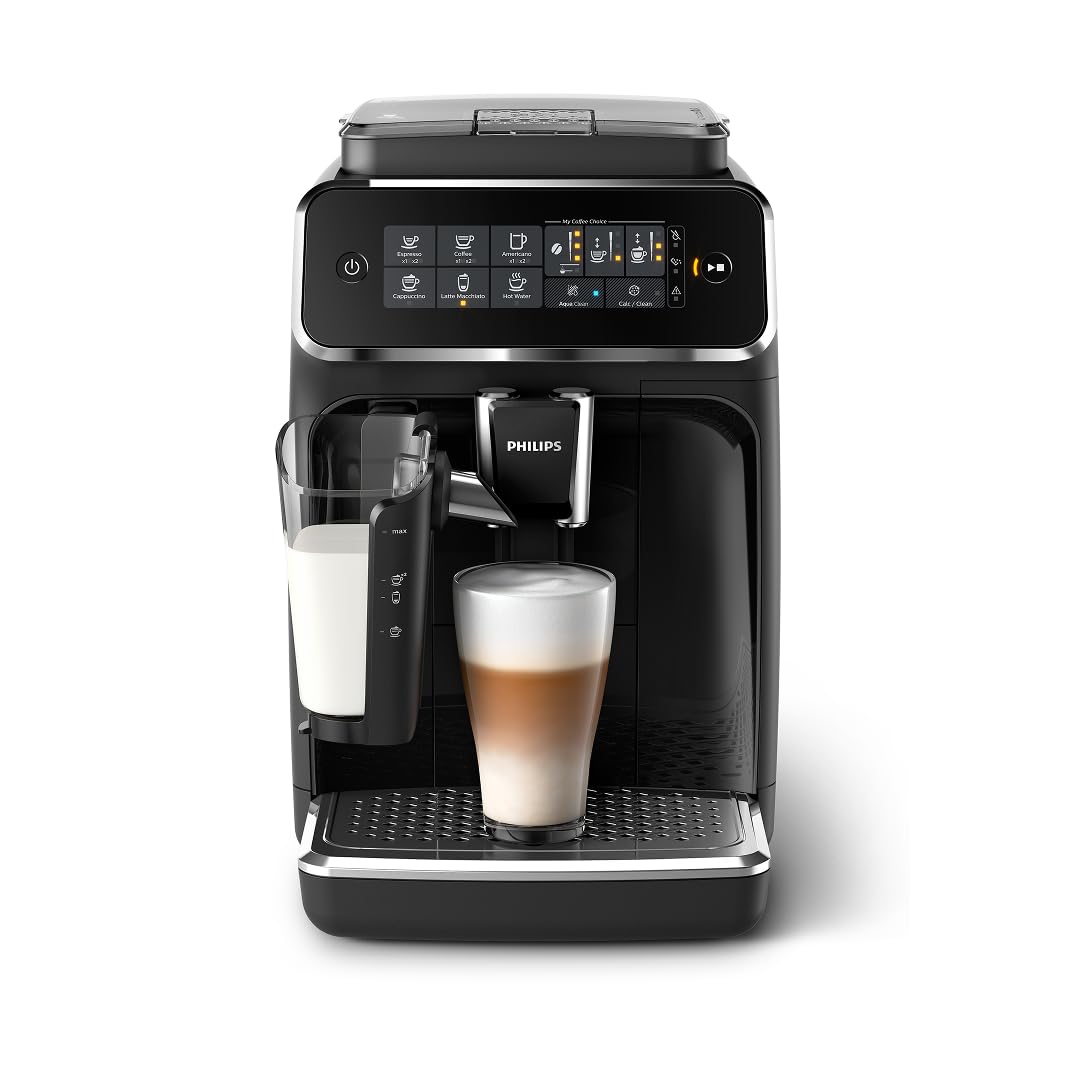
Philips 3200 LatteGo (premium): you want milk drinks at one touch with very little learning. A fully automatic bean to cup machine.
How much hands on time do you want each morning? A manual machine means dosing, tamping, brewing and steaming milk yourself, then cleaning the portafilter and wand. A bean to cup machine grinds, brews and (on the Philips 3200) froths milk at one touch; your work moves to emptying the grounds container, rinsing the milk carafe and looking after the brew unit.
Do you already own an espresso capable grinder? If yes, a manual machine without a grinder is the better use of your budget. If no, either accept pre ground coffee with pressurised baskets for now, choose a machine with a built in grinder, or go bean to cup.
Milk drinks or straight espresso? For lattes and cappuccinos, look at how the machine handles milk: a manual steam wand (most control, most practice), a classic frother sleeve (easier, less control), or an automatic carafe like Philips LatteGo (easiest, least control over texture). If you mostly drink straight espresso, the steam system matters much less.
How much counter space, and how much height under your wall cabinets? The compact machines here are roughly 5.5 to 8 inches wide. Machines with a built in grinder or bean hopper are wider and taller, and you need room above to fill the hopper and tank.
How many drinks a day, and for how many people? One or two drinks a day suits any of these. Several milk drinks in a row favours a machine that can switch from steaming back to brewing quickly, or a bean to cup machine. The CASABREWS listing warns you to let it cool after frothing before you brew again.
As an Amazon Associate I earn from qualifying purchases. Product links below go to Amazon.
Why it fits this slot: it is a small manual machine that comes with pressurised (dual wall) baskets only, which are designed to give a drinkable shot with pre ground coffee. That makes it a realistic first machine for someone who does not own a grinder yet. It was number 1 on Amazon's espresso machine best seller list when checked, so there is a large pool of buyer reviews to learn from.
Key specs, and what they mean in use:
About 5.5 inches wide (12.28 x 5.47 x 11.97 inches, depth x width x height, per CASABREWS). One of the slimmest machines here, which suits a small coffee bar or a narrow counter.
Dual wall (pressurised) 1 cup and 2 cup baskets. Forgiving of uneven grind and tamping. The manual says these filters are for pre ground coffee.
51mm portafilter. Accessories such as tampers, dosing funnels and spare baskets must be sold as 51mm to fit. Most espresso accessory sizes are not universal, so check before you buy.
20 bar pump rating and a pressure gauge. See the spec decoder below: the pump rating is not the pressure your coffee is brewed at.
PID temperature control and low pressure pre infusion, per the CASABREWS product page. PID helps keep brewing temperature steadier.
34 oz removable water tank.
Manual steam wand for milk. You control the texture, which takes some practice.
Heats in about a minute, per CASABREWS.
1 year warranty, per the listing.
Honest drawbacks:
The listing warns that after frothing milk you must let the machine cool before brewing, or overheating protection stops it. For two milk drinks in a row, brew both shots first, then steam.
It ships with pressurised baskets only. That is fine at first, but if you later buy a proper grinder and want to learn non pressurised brewing, you will need a separate 51mm single wall basket.
The portafilter is aluminium, per CASABREWS, rather than the heavier stainless steel on the Breville machines.
The accessory list in the CASABREWS manual (two dual wall filters, portafilter, coffee spoon, cleaning needle) does not include a milk jug, so plan on buying one if you want milk drinks. The manual recommends a jug about 70 to 75mm across.
CASABREWS does not say what type of heating system it uses.
Who should skip it: anyone who wants to learn to dial in fresh ground beans from day one, anyone making several milk drinks back to back every morning, and anyone who wants push button drinks with no practice.
Why it fits this slot: it puts a conical burr grinder and a manual espresso machine in one body, so a beginner can grind fresh beans straight into the portafilter without buying a separate grinder. It is one of the most reviewed espresso machines on Amazon, which gives a large body of buyer experience to read.
Key specs, and what they mean in use:
Integrated conical burr grinder with 16 grind settings and a half pound bean hopper. Grind size is the main thing you adjust to fix a shot that runs too fast or too slow.
54mm stainless steel portafilter with both single wall and dual wall baskets, in 1 cup and 2 cup sizes. Start with the dual wall baskets while you learn, then move to single wall for more control and flavour.
15 bar pump with low pressure pre infusion, then 9 bar extraction, per Breville. Breville itself states the brew pressure, which is the useful number.
Thermocoil heating with PID temperature control.
67 oz (2 litre) water tank with a replaceable water filter.
Manual steam wand that swivels 360 degrees, plus a pressure gauge.
Size and weight: 15.9 x 13.1 x 12.4 inches and about 22 lb, per Breville. It is the biggest of the three picks. Check the height under your wall cabinets, allowing room to fill the hopper.
In the box, per the Amazon listing: stainless steel milk jug, integrated tamper, cleaning disc and tablets, water filter, and the baskets above.
1 year warranty.
Honest drawbacks:
The grinder has 16 fixed steps. Coffee specialists such as Clive Coffee point out that all in one machines squeeze the espresso range into fewer steps than a dedicated espresso grinder, so fine tuning can be harder with some beans.
There is a real learning curve: dose, grind, tamp, and steaming milk by hand.
It is wide, tall and heavy for a small kitchen.
Regular upkeep: cleaning cycles with tablets, descaling when the CLEAN/DESCALE light comes on, and replacing the water filter.
Who should skip it: anyone who already owns a good espresso grinder (a manual machine without a grinder is the better match), anyone who wants one touch drinks, and anyone with very little counter height.
Why it fits this slot: it grinds, doses, tamps, brews and froths milk at one touch, so there is almost no learning curve. Its LatteGo milk system has two parts and no tubes, which keeps milk cleaning simple. It has thousands of Amazon ratings, far more than most bean to cup models on the best seller list.
Key specs, and what they mean in use:
Ceramic grinder with 12 settings and a 275 g bean container. The Philips manual advises waiting until you have made 100 to 150 cups (around a month) before changing the grind, then changing it one step at a time, only while the grinder is running.
Five coffee varieties from the touch display, per the listing, with 3 strength and 3 temperature settings.
LatteGo milk carafe, 0.26 litre, two parts, no tubes, dishwasher safe. You set how much milk; you do not control the texture the way you would with a steam wand.
AquaClean water filter. Philips says you can make up to 5,000 cups without descaling if you replace the filter when the machine asks.
1.8 litre water tank and a grounds container that holds up to 12 servings.
Removable brew group, which you take out and rinse as the manual describes.
Pre ground coffee option, useful for an occasional decaf.
15 bar pump, per Philips.
Size: 246 x 371 x 433 mm, per Philips, which is about 9.7 x 14.6 x 17 inches. Measure your counter depth and the height under your wall cabinets.
2 year guarantee, per Philips.
Honest drawbacks:
You trade control for convenience. There is no portafilter or tamping, and only a few settings to change taste.
Its Amazon star average is lower than the two machines above, so read the critical reviews before you decide.
AquaClean filters are a repeat purchase if you want to avoid regular descaling.
Philips does not state the heating system type on the spec page I checked.
Who should skip it: anyone who wants to learn espresso as a skill, anyone who mainly wants to steam silky milk for latte art, and anyone short on counter space.
Bar numbers on the box can mislead. A 15 or 20 bar figure is the pump's rating, not the pressure your coffee is brewed at. Espresso is usually extracted at around 9 bar. The pressure in the basket comes from the resistance of the coffee puck, and many machines use an over pressure valve to cap it. Breville states this directly on the Bambino and Barista Express: a 15 bar pump delivering 9 bar extraction. So a 20 bar machine is not better than a 15 bar one because of that number. (Sources: Breville product pages; Espresso Aficionados, "Flow and pressure".)
Pressurised (dual wall) versus non pressurised (single wall) baskets. A pressurised basket has a second wall with a tiny exit hole that creates back pressure. That makes up for uneven grinding and tamping, so it works with pre ground coffee and gives consistent crema. A non pressurised basket relies on your grind and tamp alone, gives more control and flavour, and needs a good burr grinder. Breville's own guide says pressurised baskets are generally better for beginners, and many portafilters accept both. A sensible path: start pressurised, move to single wall once you have a proper grinder. (Source: Breville, "Pressurized vs non pressurized portafilter".)
Portafilter size and accessories. The portafilter is the handle that holds the basket. Its diameter decides which tampers, dosing funnels, distribution tools and spare baskets fit. The picks here use 51mm (CASABREWS, and the De'Longhi Stilosa per a third party review) or 54mm (Breville Bambino, Barista Express and Barista Express Impress). Bean to cup machines have no portafilter at all.
The grinder is the hidden cost of a manual machine without a grinder. Pre ground coffee works in pressurised baskets, but to get past that stage you need an espresso capable burr grinder. Blade grinders and many general coffee grinders cannot grind fine and evenly enough for espresso. Coffee specialists such as Clive Coffee argue the grinder matters as much as, or more than, the machine. Factor a grinder into your plan if you choose the budget route and expect to get serious. (Source: Clive Coffee, "What grinder do I need to make espresso at home".)
Built in grinder versus buying one separately later. A built in grinder saves space and a second purchase, and it is one less thing to set up. A separate grinder usually gives finer adjustment, can be upgraded on its own, and keeps working if the machine fails. Neither is wrong: built in suits people who want one box; separate suits people who expect to upgrade.
Heating systems in plain English. Breville's Thermocoil and ThermoJet, and De'Longhi's Thermoblock, heat water as it flows, so they warm up fast. PID is an electronic controller that holds the temperature steadier. A single heating system usually means you brew and steam one after the other, not at the same time.
No figures here, just what to expect to keep doing and buying.
Descaling. All of these machines need descaling unless the water is soft or filtered. Breville machines show a CLEAN/DESCALE light; Philips machines guide you through it on screen; De'Longhi's manuals cover it too.
Water filters. The Breville Barista Express and Impress use a replaceable filter in the tank. Philips uses AquaClean filters, which Philips says can remove the need for descaling for up to 5,000 cups if you change them when prompted. Either way they are a repeat purchase.
Cleaning tablets. Breville supplies cleaning tablets and a cleaning disc for its cleaning cycle; once used up, you buy more. Bean to cup machines have their own cleaning routines for the brew unit and milk system.
Milk system cleaning. Purge and wipe a steam wand straight after every use, or dried milk blocks it. Rinse the Philips LatteGo after use and put it in the dishwasher regularly.
Brew unit care. On the Philips, take out and rinse the brew group as the manual describes.
Coffee. Fresh whole beans for grinder machines; pre ground coffee works with pressurised baskets.
Small extras for manual machines: a milk jug (not listed in the CASABREWS box), a better tamper, a knock box and a small scale.
Skipping the first use steps. The CASABREWS manual asks you to remove the plug at the bottom of the water tank and to run hot water through the steam wand before the first coffee, so the pump fills with water. Read the quick start pages for any machine.
Expecting supermarket pre ground coffee to work in a single wall basket. It usually runs too fast and tastes sour or weak. Use the dual wall basket until you have an espresso capable grinder.
Judging the shot by the gauge or the crema alone. Pressurised baskets create crema and pressure readings even when the coffee is not well matched. Taste matters more.
Brewing straight after steaming on a small machine. On the CASABREWS this can trigger overheating protection. Brew first, then steam.
Changing too many things at once. Adjust one thing at a time, usually the grind. On the Philips 3200, the manual says not to change the grind at all for the first 100 to 150 cups.
Letting milk dry on the steam wand or in the carafe. Clean it straight away.
Ignoring descaling and filter prompts. The manuals ask you to descale or change the filter when prompted; skipping it lets scale build up inside the machine.
Buying accessories in the wrong size. Check your portafilter size (51mm or 54mm here) first.
Manual machine without a grinder (CASABREWS, Stilosa, Bambino): do not choose this if you want push button drinks, if you will never buy a grinder but want café quality from fresh beans, or if you make lots of milk drinks back to back.
Machine with a built in grinder (Barista Express, Barista Express Impress): do not choose this if you already own a good espresso grinder, if counter space or height is tight, or if you have no interest in learning to dial in.
Bean to cup (Philips 3200, Philips 2200, De'Longhi Magnifica Evo): do not choose this if you want to learn espresso by hand, if you want full control of milk texture, or if you do not want to empty grounds containers and clean a brew unit.
Amazon (amazon.com):
Espresso machine best sellers: https://www.amazon.com/Best-Sellers-Espresso-Machines/zgbs/home-garden/289748
Super automatic espresso machine best sellers: https://www.amazon.com/Best-Sellers-Home-Kitchen-Super-Automatic-Espresso-Machines/zgbs/home-garden/14162671
Product pages: https://www.amazon.com/dp/B09X3WGJ3R, https://www.amazon.com/dp/B00CH9QWOU, https://www.amazon.com/dp/B07VFY4MXM, https://www.amazon.com/dp/B0B1JPPG2L, https://www.amazon.com/dp/B08C96BG9H, https://www.amazon.com/dp/B0BBYNPV33, https://www.amazon.com/dp/B0B38KFWNK, https://www.amazon.com/dp/B07VBPLPH5
Manufacturers:
CASABREWS CM5418: https://www.casabrews.com/products/cm5418
CASABREWS CM5418 manual (hosted on Amazon): https://m.media-amazon.com/images/I/A10RBKICb9L.pdf
Breville Barista Express: https://www.breville.com/en-us/product/bes870
Breville Barista Express manual: https://www.breville.com/content/dam/breville/us/assets/miscellaneous/instruction-manual/espresso/BES870-instruction-manual.pdf
Breville comparison, Barista Express and Barista Pro: https://www.breville.com/en-us/shop/espresso/compare/bes980-vs-bes870
Breville Bambino: https://www.breville.com/en-us/product/bes450
Philips 3200 LatteGo (EP3241/54): https://acc.usa.philips.com/c-p/EP3241_54/series-3200-fully-automatic-espresso-machines
Philips 800, 1200, 2200 and 3200 Series manual: https://dam.versuni.com/m/1c0ca7708b56dd5d/original/CO_2025_800-Series_1200-Series_2200-Series_3200-Series_Manual-Philips_RCA.pdf
Philips 2200 (EP2220/14): https://acc.usa.philips.com/c-p/EP2220_14/series-2200-fully-automatic-espresso-machines
De'Longhi Stilosa: https://www.delonghi.com/en-us/p/stilosa-stilosa-espresso-machine/EC260BK.html?pid=0132104209
De'Longhi Magnifica Evo: https://www.delonghi.com/en-us/p/magnifica-evo-magnifica-evo-espresso-machine/ECAM29043SB.html?pid=0132220070
De'Longhi Magnifica Evo service manual: https://dls.delonghigroup.com/files/docs/4/DSDL-22014-A.pdf
Background and technique:
Breville, pressurised versus non pressurised portafilters: https://www.breville.com/us/en/blog/coffee-and-espresso/pressurized-vs-non-pressurized-portafilter.html
Espresso Aficionados, flow and pressure: https://espressoaf.com/info/flow_and_pressure.html
Clive Coffee, what grinder you need for espresso at home: https://clivecoffee.com/blogs/faqs/what-grinder-do-i-need-to-make-espresso-at-home
Coffeeness review of the De’Longhi Stilosa (third party, for portafilter size and basket type): https://www.coffeeness.de/en/delonghi-stilosa-review/