

Lead Generation Made Easy: An In-Depth Review of HeySummit
Streamline your lead generation with HeySummit. This in-depth review covers features, benefits, and strategies to maximize your event's impact.



Published: June 19, 2026
You need automation that keeps pace with complex workflows and evolving team demands. Make brings a visual automation canvas and no-code logic so you can map, test, and deploy processes without writing scripts. Understanding how Make fits into your stack helps you save time, reduce errors, and free your team to focus on higher-value work.
You will find Make feels like a blank canvas for automations, letting you stitch apps and data together with a drag-and-drop builder rather than diving into code. For everyday work you can automate routine reports, keep CRM records in sync, or trigger notifications when something needs attention.
For special projects you can orchestrate multi-step launches, onboard new customers with condition-based flows, or handle event registrations that route data to the right teams. If you prefer a hands-on, visual way to model processes and iterate quickly, Make gives you that freedom while keeping things organized for teams.
Pros |
Cons |
|---|---|
✅ Intuitive visual editor that reduces reliance on engineers |
❌ Advanced scenarios can become hard to visualize |
✅ Flexible logic that handles multi-path workflows |
❌ Performance and optimization matter at very high volumes |
✅ Good range of ready-made integrations |
❌ Debugging very large scenarios may take extra time |
✅ Useful tools for testing and monitoring individual runs |
❌ Some enterprise features require familiarization before you can use them well |
Situation |
How It Helps |
|---|---|
Small Team Operations |
You can automate repetitive admin tasks like invoicing, reporting, and lead routing so your team spends less time on manual work and more on priorities that move the business forward. |
Marketing Campaigns |
You can build multi-step campaign flows that segment audiences, enrich records, and trigger follow-ups based on respondent behavior without juggling spreadsheets. |
Product Launches |
You can coordinate tasks across tools to ensure assets, notifications, and checklists run in the right order and only for the relevant stakeholders. |
Data Synchronization |
You can keep CRMs, analytics, and support systems in sync with conditional rules that prevent duplicate records and preserve data integrity. |
Feature |
Ease Level |
|---|---|
Visual Builder |
Easy |
Prebuilt Templates |
Easy |
Advanced Logic |
Moderate |
Debugging & Monitoring |
Moderate |
Software |
Integration Quality |
|---|---|
Google Workspace |
Native Connector |
Slack |
Native Connector |
Salesforce |
Well Supported |
APIs / Webhooks |
Flexible |
Databases |
Moderate |
You get branching that can route dozens of different outcomes, conditional steps that run only when criteria match, and powerful data transformation tools to reformat and combine inputs. Scheduling, triggering by webhooks, and API integrations let you connect both push and pull patterns, while error handling and retry logic help keep flows resilient.
Collaboration features let you share scenarios, control access, and maintain versions so teams can iterate without stepping on each other.
Make is designed around a visual canvas, so you will find the basics approachable even without coding experience. The drag-and-drop builder and templates let you prototype automations quickly, but advanced scenarios that use deep branching and complex data transforms do require some practice. A good approach is to start with a simple scenario, reuse a template that matches your use case, and run tests with sample data so you can iterate without impacting production.
If you work with a team, share scenarios and use versioning to avoid conflicting edits while people learn.
Make has a broad connector library for common tools like Google Workspace, Slack, and CRMs, and it also supports APIs and webhooks so you can link bespoke systems. You will typically authenticate via OAuth or API keys, and you should be mindful of any rate limits or authorization scopes required by your services. A practical tip is to validate endpoints with a tool like Postman first, use webhooks to reduce polling where possible, and handle data mapping with the built-in transformer so records move cleanly between systems.
Make can handle enterprise workloads, but reliability and performance depend on how you design your scenarios. You should implement error handling and retry logic, use batching and pagination for large datasets, and split very large processes into smaller coordinated scenarios to reduce complexity.
Instrument your automations with monitoring and logging, run load tests on representative data, and prefer webhooks over polling to lower overhead. These practices help you scale while keeping runs predictable and easier to debug.
You’ll pick Make when you want a visual, no-code way to prototype and run automations that can handle complex, conditional logic. It links to a wide range of apps, offers built-in data transformation and collaboration tools, and helps you reduce manual work while scaling workflows across your team.
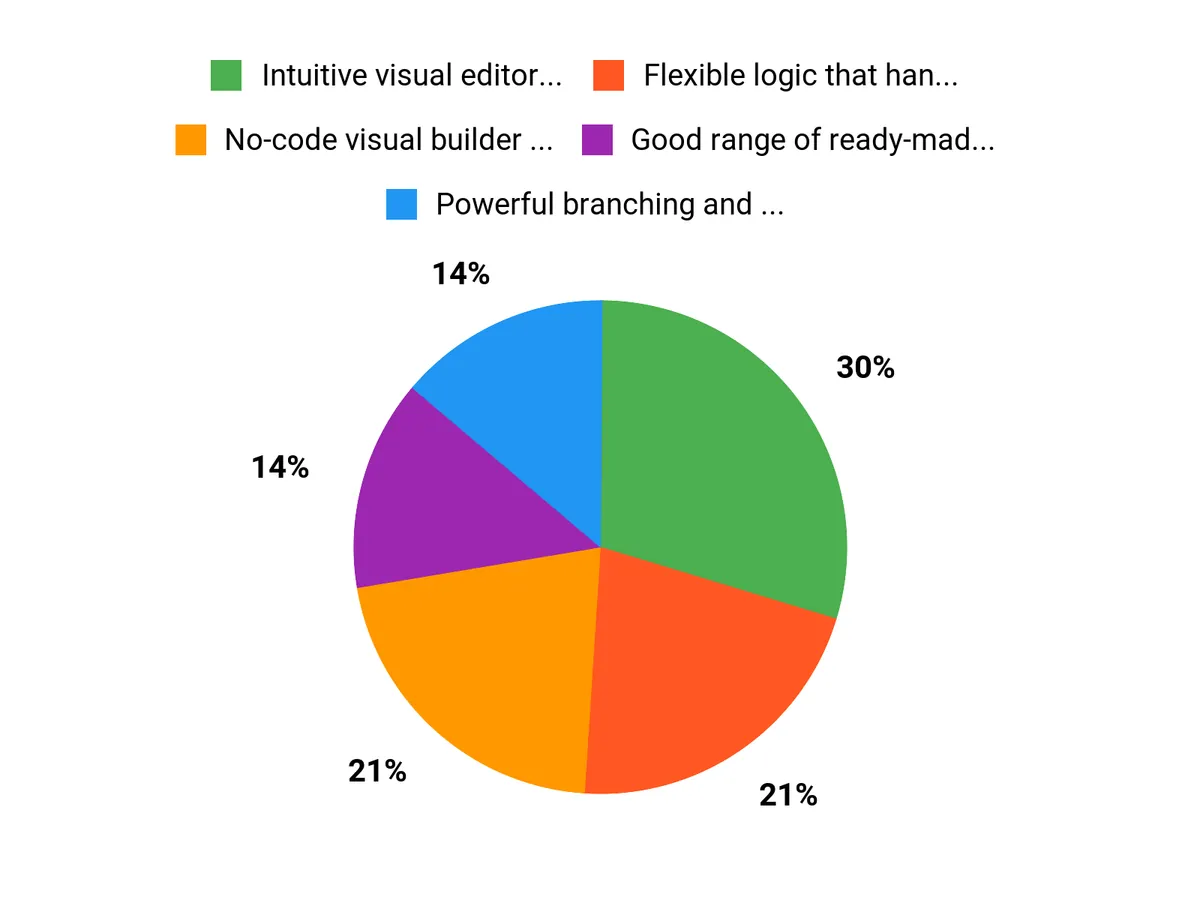
Make is a strong choice when you need a no-code, visually driven platform that can handle both simple automations and complex enterprise processes. You will appreciate how the visual canvas speeds up prototyping and how deep branching, data transforms, and a large connector library let you centralize logic without custom code.
If you are scaling automation across teams, the collaboration and governance features will help, while complex high-volume scenarios may require careful testing and monitoring to optimize performance.
Streamline your lead generation with HeySummit. This in-depth review covers features, benefits, and strategies to maximize your event's impact.

Elevate your coaching this autumn with Teachable's powerful tools and features designed to enhance your online courses and engage your audience effectively.

Uncover the top sales funnel software trends for the holiday season, enhancing your marketing strategy and boosting conversions for maximum holiday sales.