
Lead Generation Made Easy: An In-Depth Review of HeySummit
Streamline your lead generation with HeySummit. This in-depth review covers features, benefits, and strategies to maximize your event's impact.



Published: May 09, 2026
Summer 2026 brings an abundance of apps, data sources, and repeatable tasks, and you need ways to keep work moving without burning time on manual steps. Automation helps you reduce errors, scale workflows, and free up attention for higher-value decisions, so choosing the right platform matters for both day-to-day efficiency and long-term growth.
Make stands out as a visual automation platform that lets you design, build, and automate anything from simple tasks to complex enterprise workflows with infinite branching logic and no coding required. In this article you will learn why that visual approach can speed up your setup, simplify maintenance, and give you more control over integrations and logic.
You can use Make to sketch out automations visually, then connect apps and data without writing code. It works well for everyday chores like syncing form responses to a spreadsheet, routing alerts to the right Slack channel, or batching file conversions, and it also scales to larger projects such as multi-step onboarding sequences or cross-team data pipelines.
The canvas makes it easy to see how data flows and where conditions apply, which helps when you need to tweak something later. If you want a practical tool that lets you prototype quickly and then expand into more sophisticated routing, Make is a solid choice you can grow into.
Pros |
Cons |
|---|---|
✅ Intuitive visual editor that lowers the barrier to automation |
❌ Large flows can become visually dense and harder to navigate |
✅ Handles complex branching and multi-step logic without code |
❌ Advanced scenarios sometimes require learning platform-specific patterns |
✅ Good library of connectors plus API support for custom needs |
❌ Some connectors may have limitations that need workarounds |
✅ Active community and helpful templates to get started faster |
Situation |
How It Helps |
|---|---|
Daily Repetitive Tasks |
You can automate routine actions like moving data between apps, sending notifications, or updating records so you reclaim time for higher-value work. |
Team Onboarding |
You can assemble multi-step onboarding sequences that create accounts, assign permissions, and notify stakeholders without manual handoffs. |
Marketing Campaigns |
You can orchestrate lead capture, enrichment, and follow-ups across tools so campaigns run smoothly and data stays consistent. |
Data Synchronization |
You can keep databases, CRMs, and analytics platforms aligned by scheduling or triggering syncs with controlled error handling. |
By turning repeatable manual steps into automated flows, Make frees up minutes or hours each day depending on your workload. You reduce context switching, avoid human errors in routine tasks, and shorten the time from idea to working automation because you can assemble and test visually.
Software |
Integration Quality |
|---|---|
Google Workspace |
Excellent |
Slack |
Very Good |
CRMs (e.g., HubSpot, Salesforce) |
Strong |
Custom APIs |
Flexible |
Make supports conditional logic, branching, looping, scheduled triggers, and error handling so you can model real-world processes. You can build parallel paths, transform data between steps, and call external APIs, which makes the platform suitable for both one-off automations and complex enterprise workflows.
Rating:
Get DetailsMake is approachable because you build automations on a visual canvas, which makes data flows and decision points easy to follow. You can start with a simple template or a tiny scenario to see how triggers, actions, and data mapping work.
As you get comfortable, you can add conditions and loops; those advanced patterns take a bit more practice but the platform’s documentation and community examples help you learn faster. A good rule is to prototype a small end-to-end flow, run it with test data, then expand it once the logic feels solid.
Yes. Beyond its library of built-in connectors for common services, Make supports webhooks, direct HTTP requests, and custom API calls so you can integrate proprietary systems or niche tools. You will want to review the API documentation for the service you’re connecting, handle authentication securely, and pay attention to rate limits and data schemas. Test with small requests first and use the platform’s response viewer to verify payloads before wiring that call into larger workflows.
As your automations scale, build with maintainability in mind by breaking complex processes into smaller scenarios, naming modules clearly, and adding comments or notes where logic gets tricky. Rely on error handling and retry strategies to catch transient failures, and use scenario run history and logs to trace issues when something goes wrong.
Set up notifications for critical failures so you don’t miss problems, and iterate in a test environment before deploying changes to production.
You’ll find many customers pick Make because it lets you build complex workflows without coding using an intuitive drag-and-drop canvas and powerful branching logic. It also connects to a wide range of apps and APIs and gives you readable, maintainable flows plus community templates and documentation that help you move from prototype to production quickly.
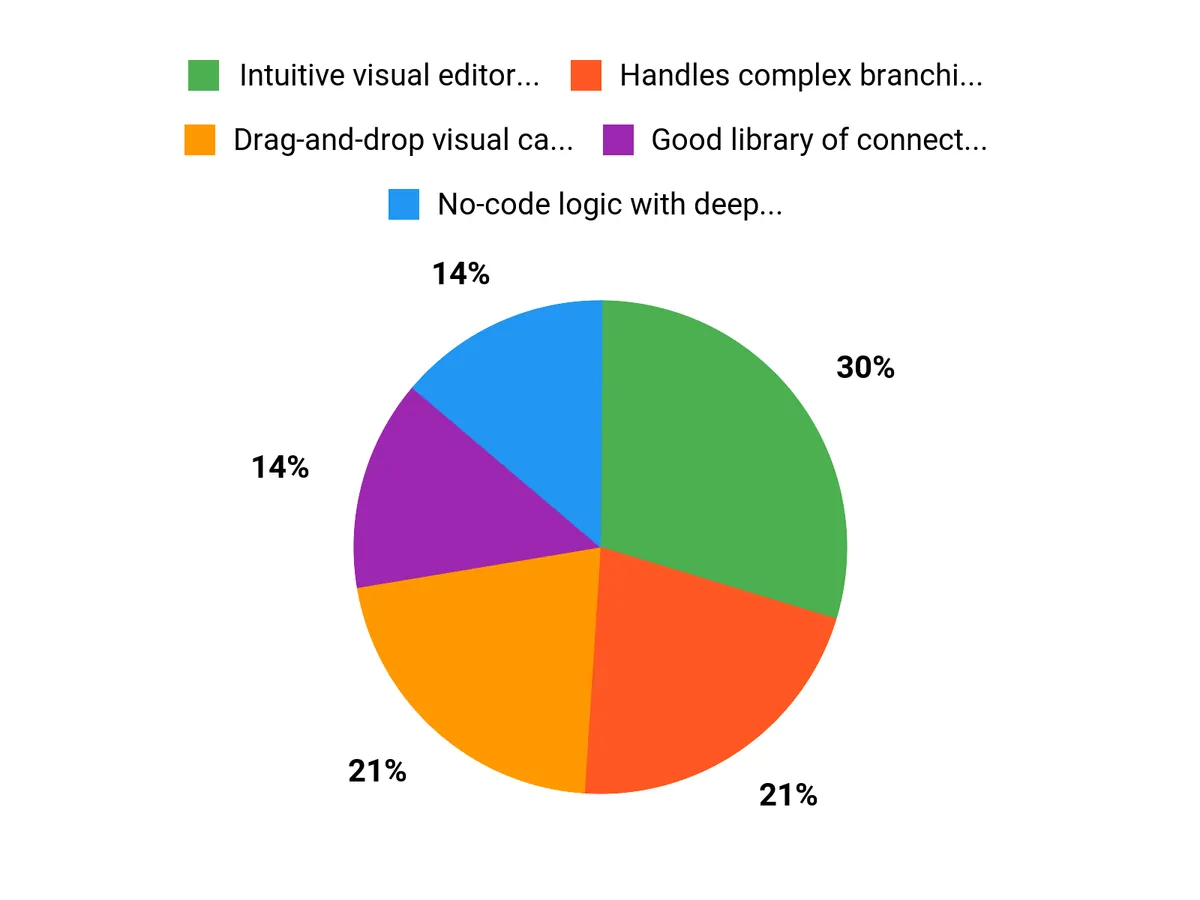
Make is a top pick for Summer 2026 because it blends a powerful visual canvas with the flexibility to handle both simple automations and complex enterprise workflows. If you want to prototype quickly, maintain readable logic, and connect a wide range of apps without writing code, Make gives you tools and community resources to move faster and reduce manual work.
Try building a small flow first to see how the visual approach maps to your processes and then scale up as needed.
Streamline your lead generation with HeySummit. This in-depth review covers features, benefits, and strategies to maximize your event's impact.

Elevate your coaching this autumn with Teachable's powerful tools and features designed to enhance your online courses and engage your audience effectively.

Uncover the top sales funnel software trends for the holiday season, enhancing your marketing strategy and boosting conversions for maximum holiday sales.