

Navigating the Crypto World: A Look at CryptoHero and Biyond
Uncover the features and benefits of CryptoHero and Biyond, two innovative platforms shaping the future of cryptocurrency trading and investment strategies.



Published: September 08, 2026
You are evaluating AI tools that can genuinely reduce support load and drive sales this fall. Chatbase powers conversational agents across chat, email, and voice so you can resolve customer issues end to end and guide buyers at scale. Understanding what it does and how it fits your stack helps you decide whether it will save time, improve satisfaction, and increase revenue.
You can think of Chatbase as a conversational teammate that handles the repetitive parts of customer work while you focus on higher-value tasks. It runs across chat, email, and voice so you can route common questions, qualify leads, and guide product usage without asking agents to repeat the same answers.
On a normal day it helps you clear queues, surface useful data from your knowledge base, and hand off complex cases to humans. During launches, seasonal spikes, or promo pushes it scales conversational capacity to keep response times steady and capture sales opportunities that might otherwise slip away. If you want a practical assistant that slots into workflows and frees up your team for strategy, this is worth trying.
Pros |
Cons |
|---|---|
✅ Multi-channel conversational coverage including voice |
❌ Some setup and training required to reach optimal performance |
✅ Customizable agent behavior and templates |
❌ Advanced customization may need technical resources |
✅ Integrates with common support and sales workflows |
❌ Voice features may require extra configuration for specific locales |
Situation |
How It Helps |
|---|---|
Daily Support Volume |
When routine tickets pile up, it handles FAQs and routine requests so you can focus on escalations and exceptions. |
Product Launches |
During launches it scales conversational capacity to answer questions, push key messaging, and reduce first-response times. |
Sales Enablement |
It can qualify leads in chat, recommend relevant products, and nudge prospects through purchase paths to improve conversion. |
Remote Or Distributed Teams |
It keeps responses consistent across shifts and locations, so you don’t rely on individual memory for complex procedures. |
Chatbase works as both a day-to-day support assistant and a tactical tool for spikes in demand. You can deploy it for simple FAQ automation, use it to augment sales conversations, or route voice queries when phone volume rises.
It fits teams that want to balance automation with human handoffs rather than replace human agents entirely.
Aspect |
Ease Level |
Notes |
|---|---|---|
Setup |
Moderate |
A guided console shortens initial setup, but you will spend time configuring intents and integrations. |
Training Agents |
Moderate |
Prebuilt templates help, yet refining for complex products needs iterative tuning. |
Admin Console |
Easy |
Dashboards and analytics are straightforward for monitoring performance and trend spotting. |
Multi-channel Management |
Easy |
Managing chat, email, and voice from a central place keeps things consistent and reduces context switching. |
Software |
Integration Quality |
|---|---|
Zendesk and similar ticketing |
Native connectors that sync tickets and conversation context |
Salesforce |
CRM syncing available to surface lead and account data in dialogues |
Shopify and e-commerce platforms |
Order and product lookups to support purchase-related questions |
Slack and collaboration tools |
Simple notifications and handoffs to keep agents in the loop |
Reduces repetitive support work so you and your team handle higher-value tasks
Maintains conversations across chat, email, and voice for consistent customer experiences
Lets you shape tone and flows so responses match your brand
Helps capture revenue by guiding customers through purchase decisions
Security varies by vendor, so you should confirm the specific protections for the app you choose. In general, look for data encryption in transit and at rest, clear data retention policies, and access controls that limit who can see conversation logs. Ask whether the provider supports data residency requirements if you need to keep records in a particular region, and run initial tests in a staging environment to verify that personally identifiable information is masked or redacted when needed. If you handle sensitive data, request documentation on compliance standards and consider contractual safeguards before moving to production.
Most modern assistants are built to connect to ticketing systems, CRMs, commerce platforms, and collaboration tools so you don’t have to rebuild workflows. Verify the app offers native connectors or APIs for the systems you rely on, and map where conversation context should appear in your ticketing or CRM records. Plan a short integration pilot to confirm ticket syncing, handoff behavior, and how the assistant surfaces account data during chats. That hands-on check helps you spot edge cases like duplicate tickets or missed context before the assistant goes live for all customers.
Expect an initial setup that ranges from straightforward to involved depending on how custom your flows are. You can speed things up with templates and by focusing on a few high-value use cases first. Training is iterative: start with common FAQs and typical purchase flows, monitor conversations, and refine responses over time.
Measure success with operational metrics like first-response time and containment rate, customer signals like CSAT or ticket reopen rates, and business outcomes such as conversion uplift on guided sales paths. A practical approach is to start small, measure clearly, and expand as the assistant proves reliable.
You choose Chatbase because it handles conversations across chat, email, and voice so routine issues get resolved without pulling your team away from higher-value work. Its customization and integrations let you match your brand’s tone and plug into existing systems, making it easy to scale support during launches and capture more sales opportunities.
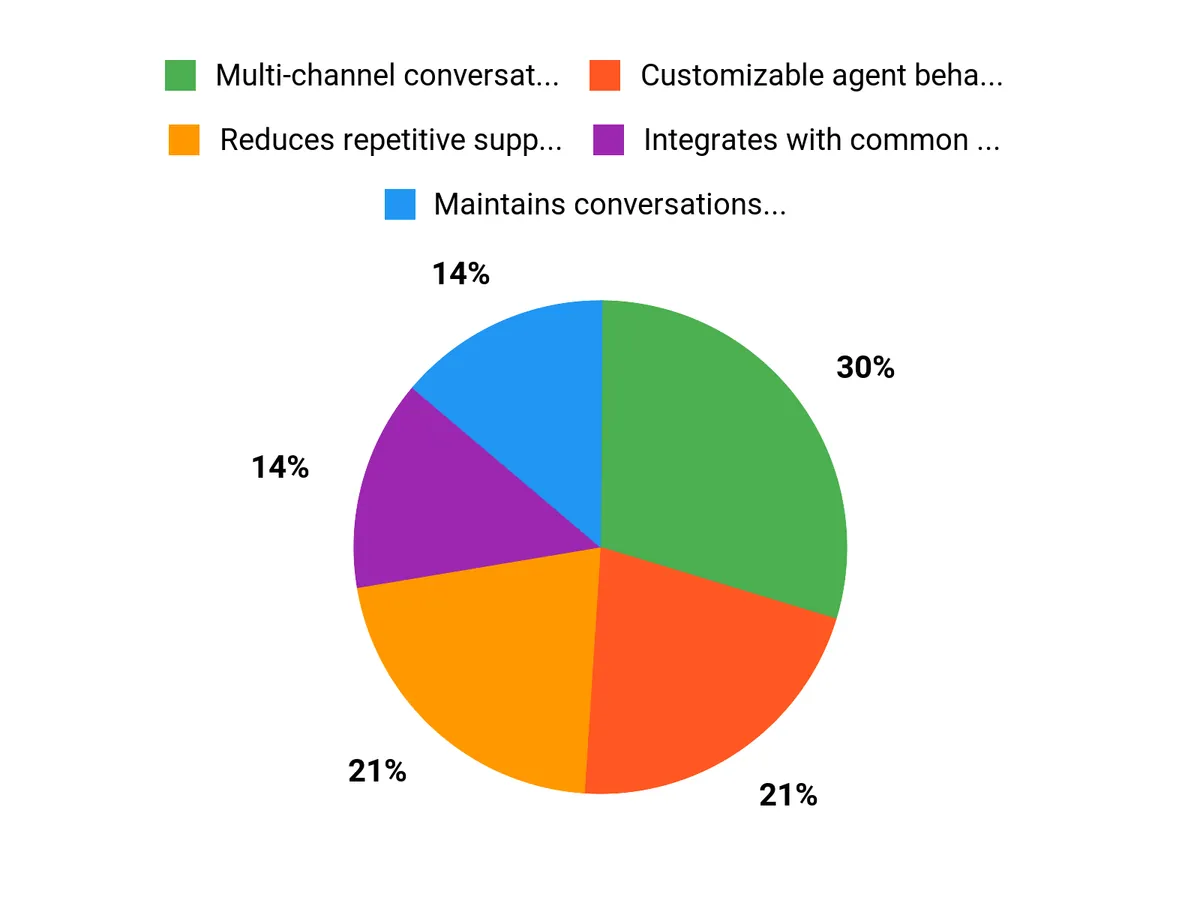
If you need a multi channel assistant that can handle support, sales, and product guidance, Chatbase is designed to be a practical choice for teams that want end to end resolution and measurable impact. With a strong focus on conversational quality and flexible customization, it can reduce response times and help capture revenue opportunities while fitting into existing workflows. Given its high user rating and clear business focus, it is worth evaluating in your stack, especially if you prioritize integrations and measurable outcomes.
Uncover the features and benefits of CryptoHero and Biyond, two innovative platforms shaping the future of cryptocurrency trading and investment strategies.

Transform your online store with Selldone's innovative features, enhancing user experience, boosting sales, and streamlining operations for e-commerce success.

Boost your productivity this fall with Chatbase, your AI assistant designed to streamline tasks, enhance organization, and optimize your workflow effortlessly.