


Espresso Accessories for Beginners: What Fits Your Machine and What You Can Skip
Essential espresso accessories for beginners: match your machine, avoid unnecessary tools, and get the best brew at home.


Published: October 30, 2026
Affiliate disclosure: As an Amazon Associate I earn from qualifying purchases. Product links on this page go to Amazon, and buying through them supports this guide at no extra cost to you.
How this guide was put together: picks are based on published specs, manufacturer information, manuals and patterns in buyer reviews. We have not tested these products hands on.
There are three common ways to turn milk into foam for a latte or cappuccino, and they suit different kitchens.
A handheld whisk. A small battery or rechargeable wand with a spinning coil on the end. You heat the milk yourself (in a microwave or a pan), then whisk it in a jug or mug. It is the cheapest and smallest option and it travels well, but it does not heat anything.
A heated jug. An electric jug with a magnetic whisk inside. Pour in milk, press a button, and it heats and foams the milk, then switches itself off. Most models also make cold foam for iced drinks and plain hot milk for hot chocolate. It is the closest thing to "press a button and walk away".
A machine steam wand. The steam pipe on many espresso machines. It heats and textures milk at the same time and can make the silky, glossy microfoam that baristas pour latte art with. It takes practice, and you need a machine that has one.
Latte art needs microfoam: milk with tiny, even bubbles that pours like wet paint. A steam wand is the usual way to get it. Handheld whisks and heated jugs make lighter, airier foam with bigger bubbles. That foam sits well on top of a drink and is lovely to spoon, but it rarely pours into a clear heart or leaf. If latte art is the goal, practise with a steam wand. If you just want a creamy, foamy drink at home, a jug or whisk is enough.
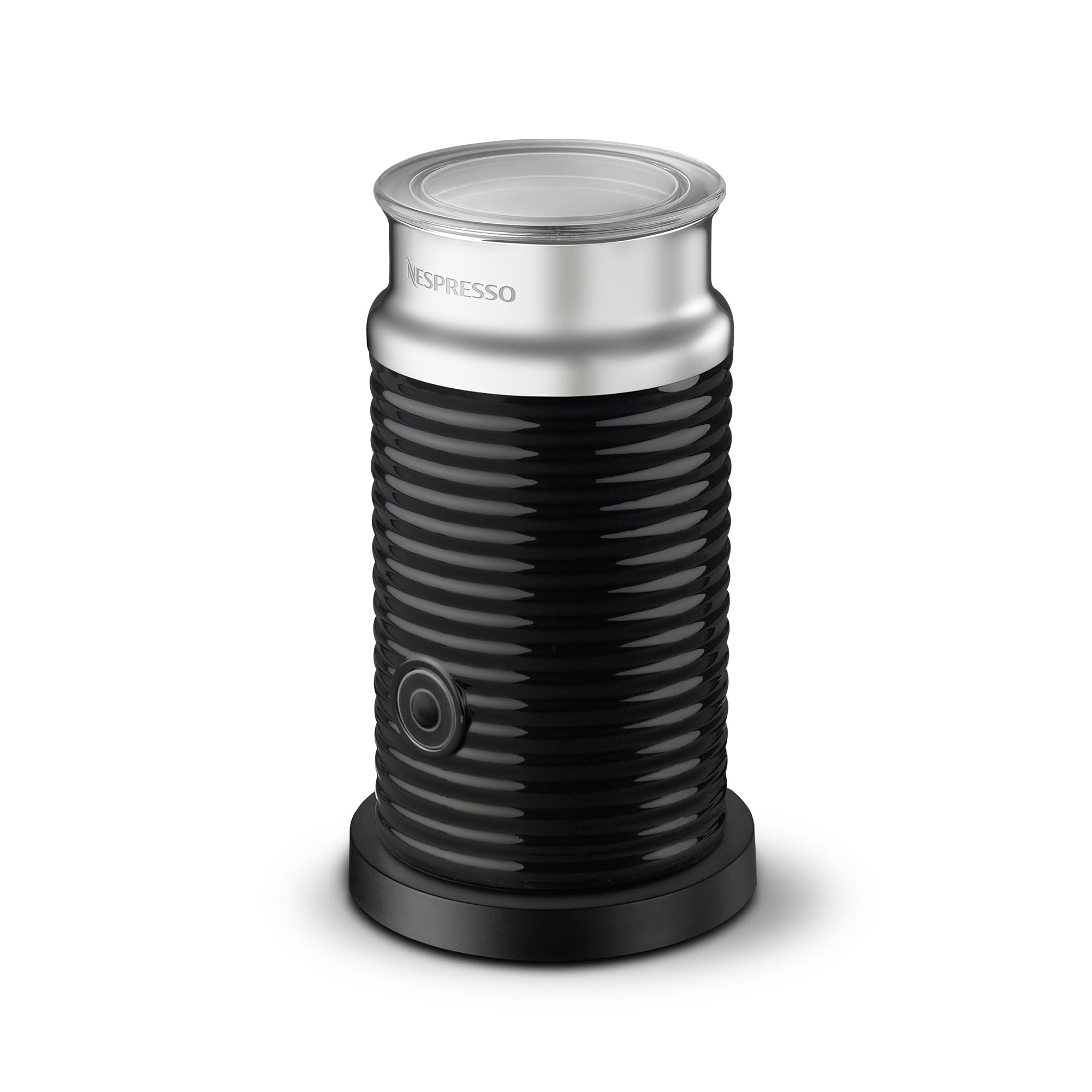
Pod machine or capsule coffee: a heated jug is the natural partner, because most pod machines have no steam wand. The Aeroccino 3 is made by Nespresso for exactly this, but any jug below works with any coffee.
Moka pot, AeroPress or strong filter coffee: a heated jug or a handheld whisk. Make the coffee strong, because milk dilutes it.
Espresso machine with a steam wand: you may not need a frother at all. A jug frother can still help on busy mornings or for cold foam, which a steam wand cannot make.
Iced drinks: pick a frother with a cold foam setting (all four heated jugs below list one), or use a handheld whisk in cold milk.
Froth line versus milk line. Heated jugs have two maximum lines: a lower one for foam, because foam grows as it froths, and a higher one for plain hot milk. The foam figure is the one that matters for lattes and cappuccinos, and it is usually enough for one or two drinks.
Hot and cold modes. "Dense" or "latte" foam is wetter and thinner; "airy" or "cappuccino" foam is thicker and stiffer. Cold foam is foam without heat, for iced coffee.
Non stick interiors. Most heated jugs use a non stick coating inside so milk wipes off easily. Use a soft cloth, not a scourer, and follow the maker's cleaning rules.
Milk type. Cold, fresh milk foams best. Whole milk gives the creamiest result; skimmed milk makes lots of stiff foam with less body. Plant milks vary a lot by brand, and "barista" versions are made to foam better.
As an Amazon Associate I earn from qualifying purchases. Product links below go to Amazon.
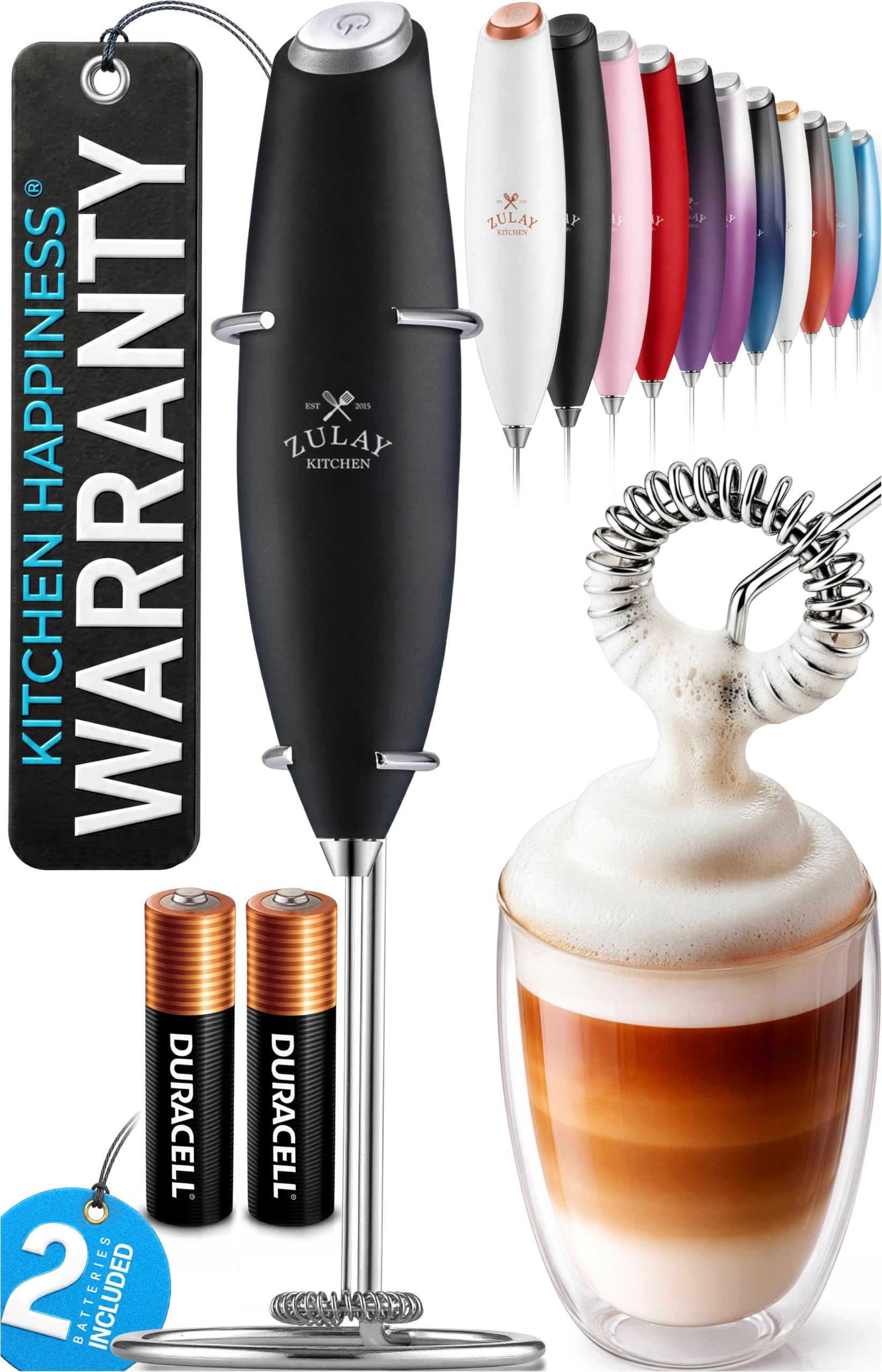
What it is: a battery powered handheld whisk with a metal stand. The listing says 2 AA batteries are included.
Who it suits: anyone who wants to try foamed milk without giving up counter space, people with a pod machine or moka pot who already have a microwave, and anyone who wants a frother for travel or the office.
How it differs in real use: it only whisks, so you heat the milk first if you want a hot drink. Whisk in a tall jug or mug with the head just under the surface, then lower it to finish. It is quick to clean: Zulay says to run it in hot water for a few seconds. The listing says it works with dairy and plant milks.
Who can skip it: anyone who wants hot milk at a button (look at the heated jugs), and anyone hoping for latte art texture.
Worth knowing: the listing mentions a lifetime guarantee. Buyer reviews often praise how powerful and easy it is, while a noticeable group report it stopped working after weeks or months, and battery life gets mixed comments. Zulay also sells a newer rechargeable model.
What it is: a rechargeable handheld frother with a USB C port, a 1200mAh battery, a stainless steel stand and two detachable whisk heads.
Who it suits: someone who likes the handheld idea but does not want to keep buying batteries, and who makes a foamy drink most days.
How it differs in real use: the listing quotes 8000 RPM and foam in about 15 seconds, with a single button. Like any handheld, it does not heat milk, so warm the milk first for hot drinks. Two whisks mean you can keep one for milk and one for drinks such as matcha.
Who can skip it: anyone who wants heating built in, and anyone happy with the battery Zulay.
Worth knowing: Maestri House says a full charge takes about 3 hours and can last 2 to 3 months, which will depend on how often you use it.
What it is: an electric jug frother with four modes: warm dense foam, warm airy foam, cold foam and warm milk without foam. It switches itself off when the milk is ready.
Who it suits: a pod or moka pot owner who wants hot or cold foam at a button, and people who also want warm milk for hot chocolate or matcha.
How it differs in real use: the listing says it warms up to 300 ml (10.1 oz) of milk, or foams up to 130 ml (4.4 oz). Each mode has its own maximum line, so fill to the right one. The two warm foam settings let you choose a wetter foam for lattes or a stiffer foam for cappuccinos.
Who can skip it: steam wand owners who are happy with their wand, and anyone who wants to put the jug in the dishwasher.
Worth knowing: the inside is a non stick (Teflon) coating. SIMPLETASTE says not to immerse the base or rinse the outside, and suggests milk with over 3% fat, straight from the fridge, for the best foam. Buyer reviews are positive on ease of use, with some reports of it failing after a few months and some finding the milk warm rather than hot. A newer touch screen model also exists.
What it is: an electric frother and steamer with four functions: cold foam, light warm foam, dense warm foam and warm milk. It has two buttons, a cool touch outside, a side handle and a pouring spout.
Who it suits: someone who wants a heated jug that is easy to hold and pour from, and who likes having separate light and dense foam settings.
How it differs in real use: the handle and spout make pouring neater than lifting a jug by its body. The listing gives a 10 oz (295 ml) capacity; as with any jug, the foam line will be lower than the milk line.
Who can skip it: anyone who values reliability above everything else. This model has more critical reviews than the other jugs in this guide.
Worth knowing: read the critical reviews before buying. The pattern there is clear: many buyers report it stopped foaming after a few weeks or months, heat and foam get mixed comments, and some mention the whisk falling off when pouring. Buyers who like it mostly mention how easy it is to use. The listing notes the product contains PTFE (the non stick coating). It is a 120 volt, 500 watt model.
What it is: Nespresso's small heated jug, with a magnetic whisk, a non stick inside and automatic shut off.
Who it suits: Nespresso and other pod owners who want hot foam, hot milk or cold foam from one button with very little to learn.
How it differs in real use: a short press makes hot foam; hold for about 2 seconds for cold foam. The listing gives a maximum of 4.1 oz of milk for foam and 8.1 oz for hot milk, and heats to about 160 to 170°F, which is warm rather than very hot. It is one of the smaller jugs here, so it suits one or two drinks at a time.
Who can skip it: households making several milk drinks in a row (look at the Milk Café), and anyone who mostly uses plant milk.
Worth knowing: Nespresso's listing says it works best with cow's milk and does not promise results with alternatives. Buyer reviews are mixed: many like the foam and the simple routine, while others say it stopped frothing, is not hot enough or makes less foam than they hoped.
What it is: an induction heated milk frother with a removable jug, a temperature selector, and two whisk discs (latte and cappuccino).
Who it suits: someone who makes milk drinks every day, wants to choose how hot the milk gets, and likes the idea of a jug that goes in the dishwasher.
How it differs in real use: because the jug lifts off an induction base, it is easier to rinse and pour than the jugs with a fixed base. Breville includes a measuring cap for adding hot chocolate or chai ingredients, so it doubles as a hot drinks maker. Swap discs to switch between thinner latte foam and thicker cappuccino foam.
Who can skip it: anyone with a steam wand they already use, and anyone who only makes an occasional latte (a budget jug or handheld will do).
Worth knowing: the listing gives a 1 year limited warranty and says the jug is dishwasher safe. Buyer reviews often praise thick foam and easy cleaning, with some reports of it stopping frothing within months.
No machine, moka pot or instant coffee, small budget: Zulay or LunaFro, with milk warmed in the microwave.
Pod machine, one or two drinks a day: SIMPLETASTE, Instant Pot or Aeroccino 3.
Several milk drinks a day, want to set the temperature: Breville Milk Café.
Iced lattes and cold foam: any of the heated jugs on cold mode, or a handheld whisk in cold milk.
Want to learn latte art: use an espresso machine with a steam wand and a stainless milk jug. Frothers make tasty foam, but not the texture for clear patterns.
Latte: one or two shots of espresso, or about 60 ml of strong moka pot or pod coffee, in a large cup. Top with hot milk and a thin layer of foam, about 1 cm. Use the dense or latte setting on a jug.
Cappuccino: the same coffee in a smaller cup, with less milk and a thick cap of foam, roughly equal parts coffee, milk and foam. Use the airy or cappuccino setting.
Iced latte: fill a glass with ice, pour over one or two shots of espresso or strong coffee, add cold milk, then spoon cold foam on top. Sweeten the coffee before adding ice, because syrup mixes more easily into warm coffee.
Filling a jug above the foam line, then cleaning milk off the counter.
Using warm milk in a jug frother. Cold milk straight from the fridge foams better.
Expecting latte art from a whisk or jug. It makes foam, not microfoam.
Putting a jug with a built in base under the tap or in the dishwasher when the maker says not to.
Scrubbing a non stick interior with anything rough.
Read our beginner guide first: Best Espresso Machine for Beginners: Three Types, Plainly Explained
Need the rest of the kit? Espresso Accessories for Beginners: What Fits Your Machine and What You Can Skip
Sources: listing details and maker descriptions on amazon.com checked 30 Oct 2026 (Zulay Kitchen, Maestri House, SIMPLETASTE, Instant Pot, Nespresso, Breville); SIMPLETASTE capacity and cleaning notes and Nespresso milk guidance from their listings; patterns in buyer reviews on each listing.
Essential espresso accessories for beginners: match your machine, avoid unnecessary tools, and get the best brew at home.

Best espresso machine for beginners: a compact manual machine, one with a built in grinder, or bean to cup. Who each suits, what specs mean, who should skip.

Top accessories, premium beans, and unique tools to upgrade any home espresso setup for the seasoned coffee enthusiast.